L
01
Length
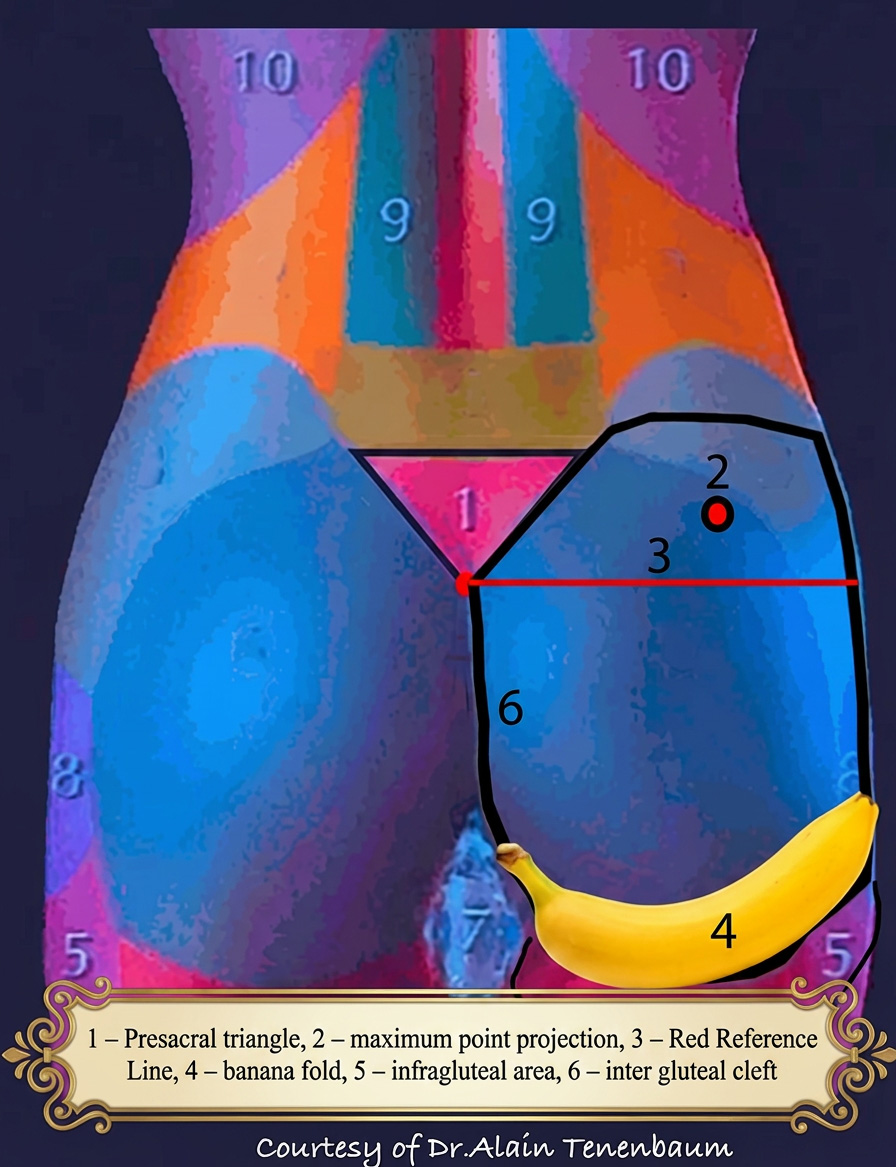
The vertical dimension of the gluteal contour, extending between the superior apex of the infragluteal diamond and the inferior apex of the presacral triangle.
Vertical contour
Gluteoplasty · Fundamental Principles
Gluteal myomodulation reshapes the existing contour by selectively modifying its length, width and height while preserving the overall volume.
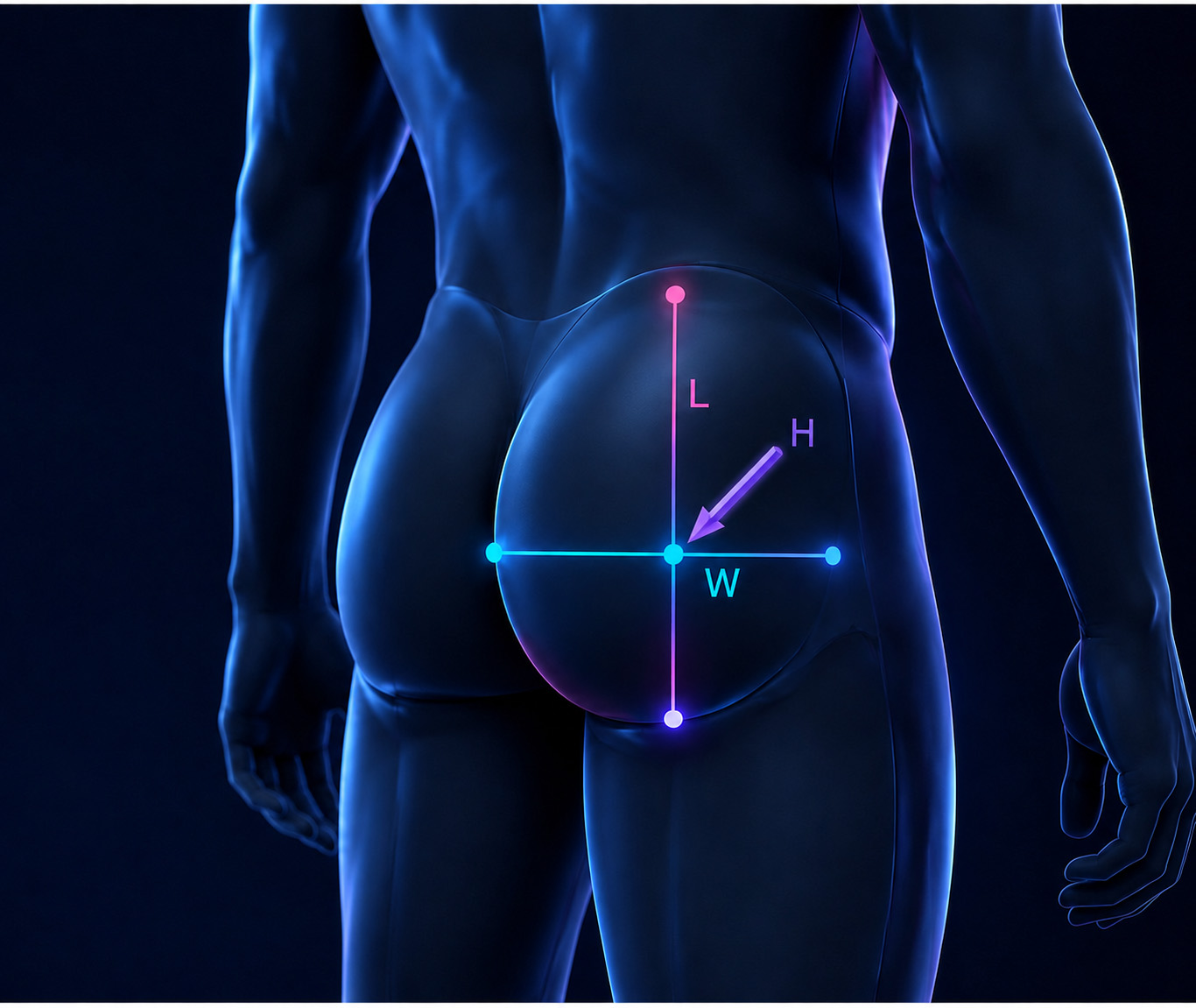
Fundamental Basics · Spatial Framework
The male gluteal contour can be described through three spatial dimensions: length, width and height—or projection.
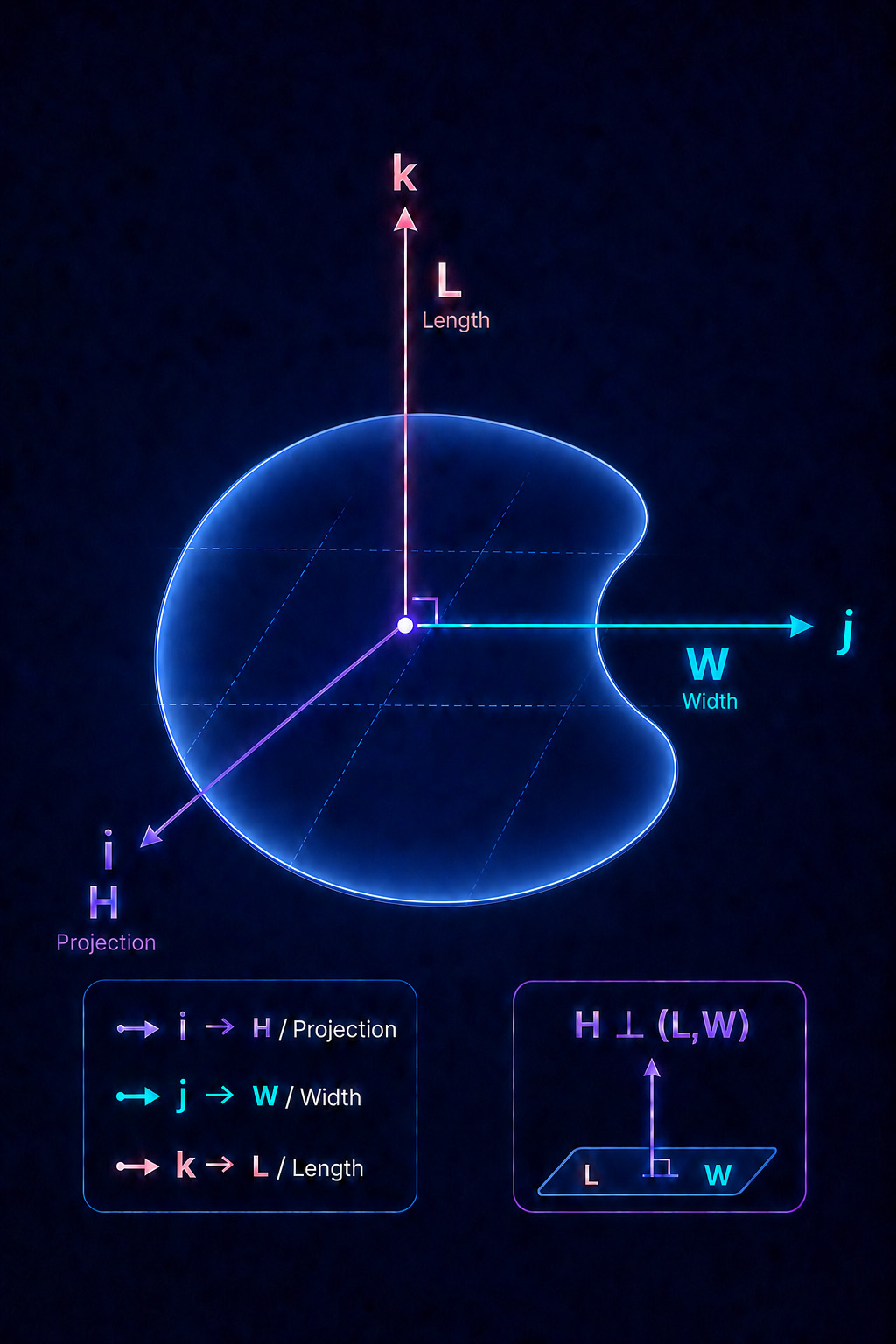
The vertical dimension of the gluteal contour, extending between the superior apex of the infragluteal diamond and the inferior apex of the presacral triangle.
Vertical contourThe transverse dimension of one gluteal side, measured from the intergluteal cleft to the lateral gluteal border.
Transverse contour
The height or projection H is the Euclidean distance |OPmax| measured along the H-axis, which is normal to the L–W plane. O is the origin where the central H-axis intersects the L–W plane, and Pmax is the point of maximal gluteal projection on that same axis.
Sagittal projectionFundamental Basics · Dimension L
Reducing the vertical length of the gluteal contour creates a lifting effect while allowing the overall three-dimensional volume to remain controlled.
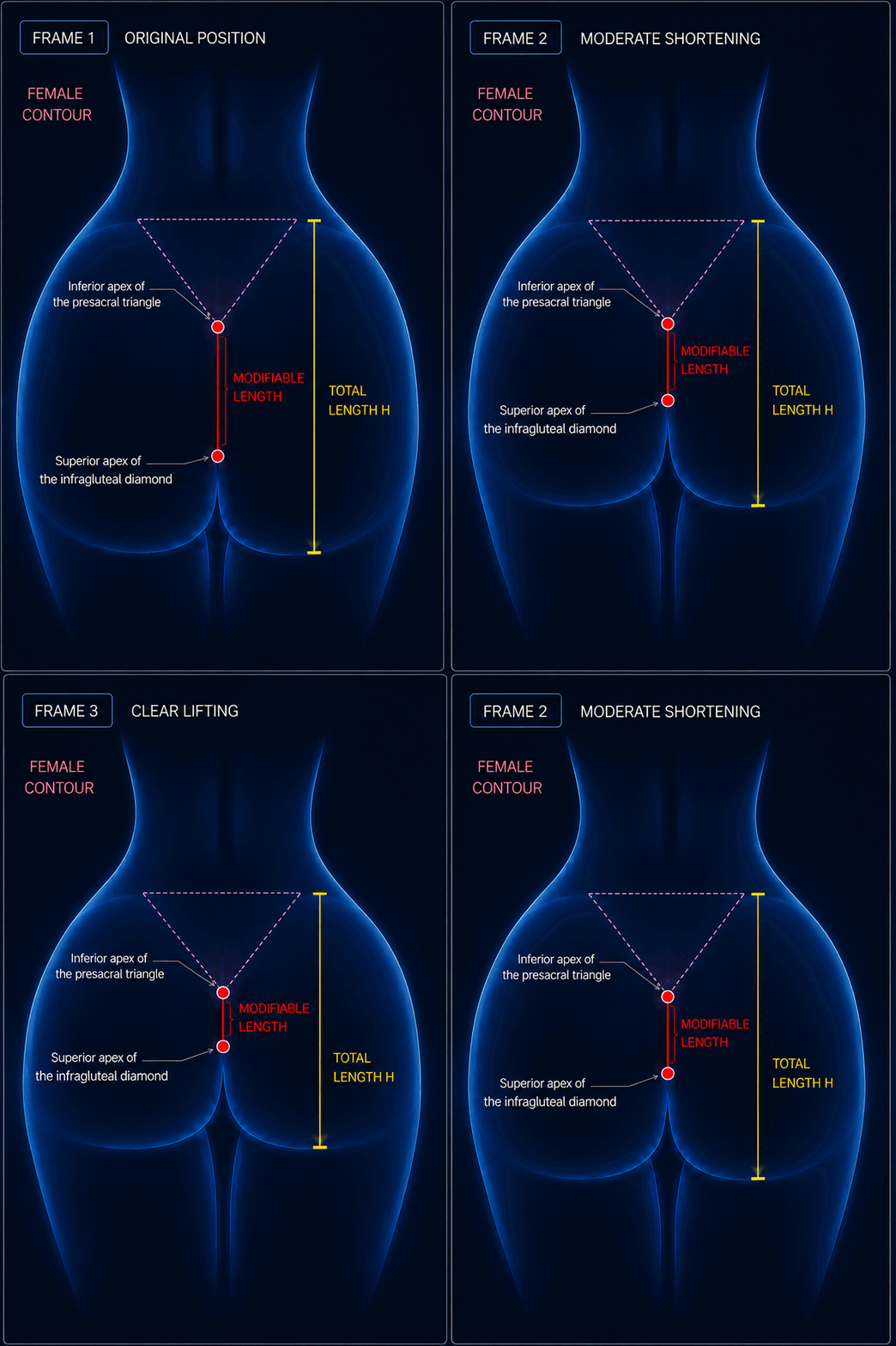
The lifting effect is obtained by reducing the vertical dimension of the gluteal contour rather than by simply increasing its volume.
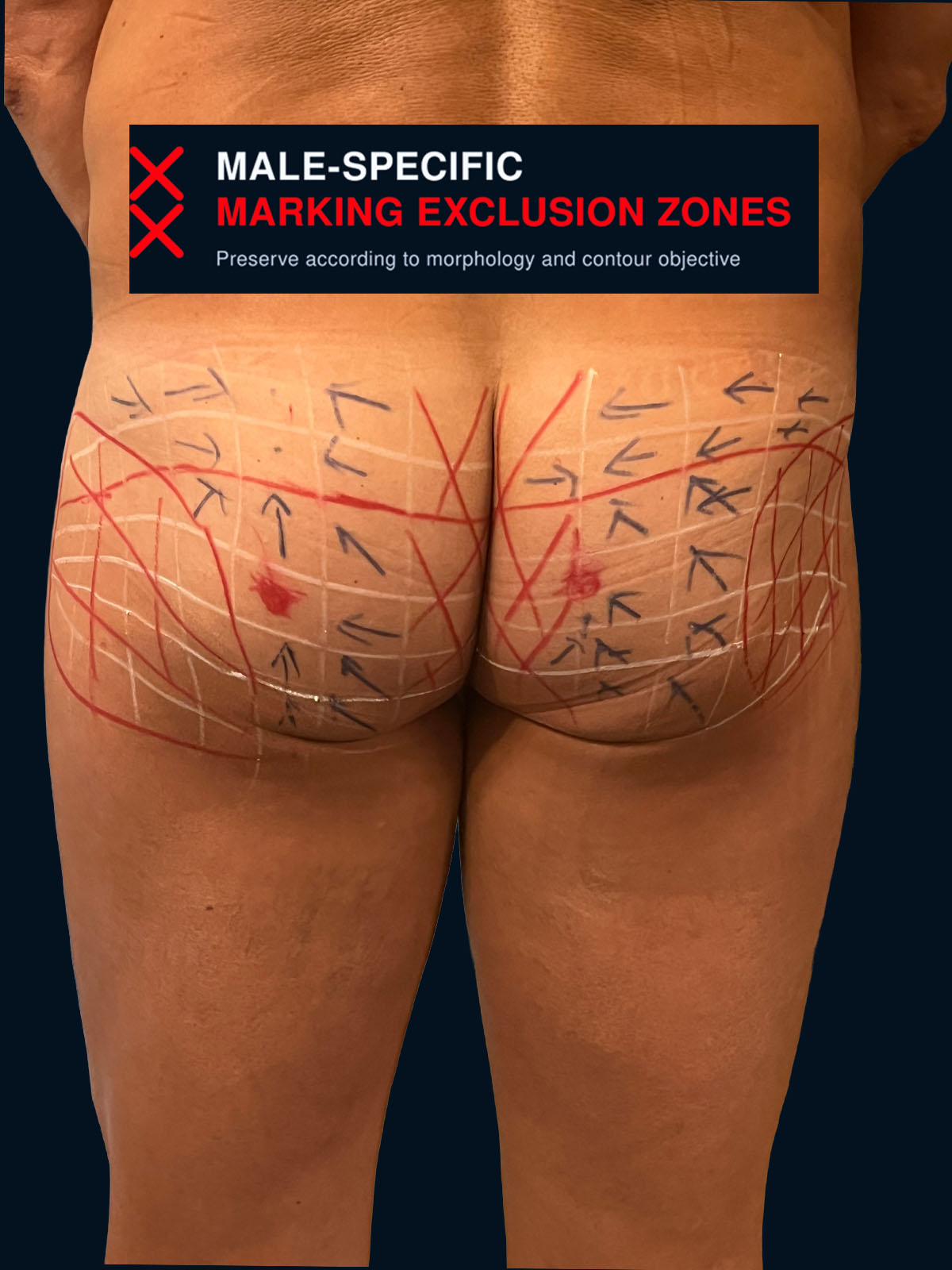
In male gluteoplasty, lifting should generally be achieved through superior or global shortening of the gluteal contour, while preserving the banana fold and avoiding direct treatment of the infra-gluteal convexity located immediately below it.
Treating this infra-gluteal convexity may raise the lower contour excessively and create a more feminine gluteal configuration.
Contour, Clothing and Visual Architecture
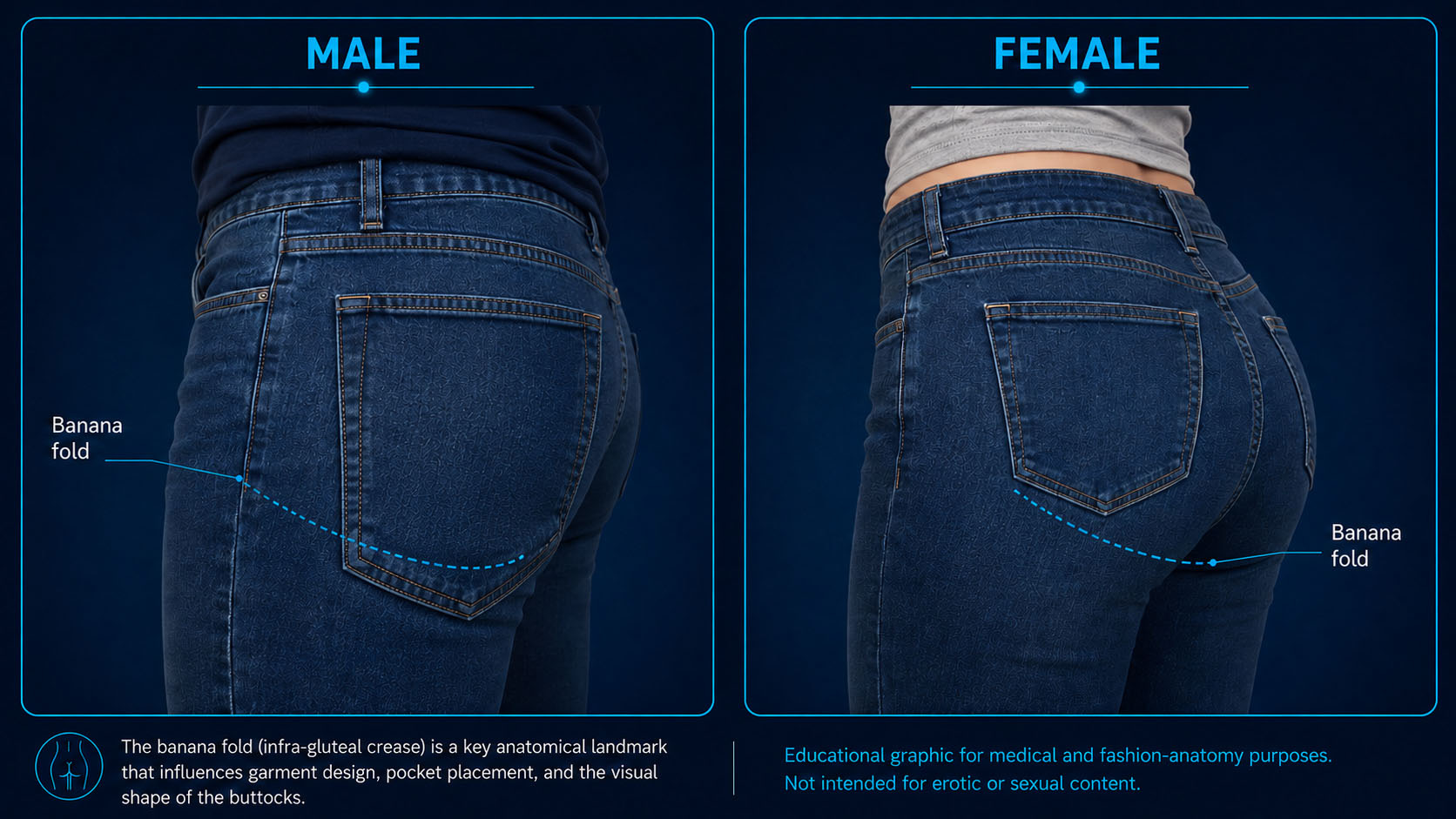
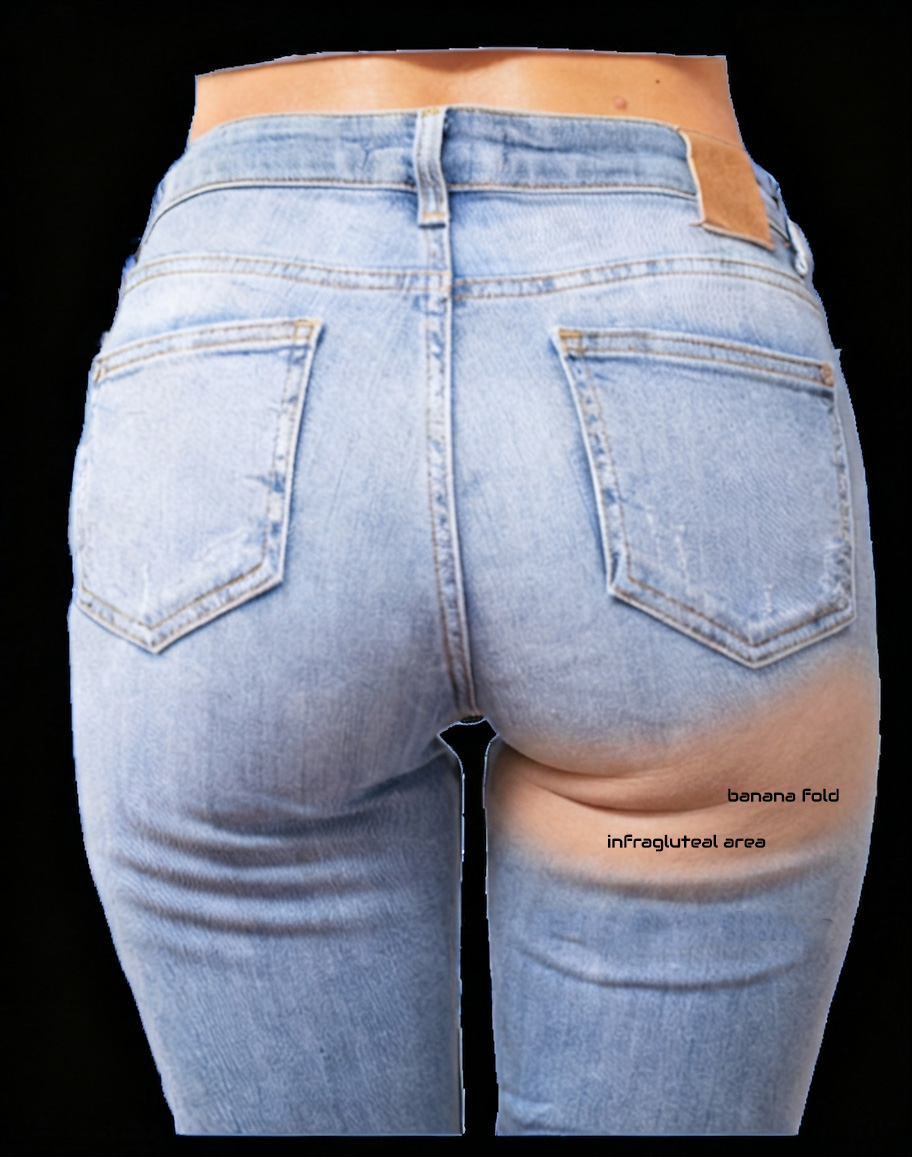
In conventional masculine jeans, the pockets generally extend below the banana fold, reinforcing a lower male gluteal contour.
In feminine jeans, the pockets are more often positioned above the banana fold, visually emphasizing a higher lower-gluteal contour.
Some masculine fashion designs have placed the lower edge of the pockets at the level of the banana fold, creating a more feminine visual tendency.
Three Contour Strategies
The principal strategy for adapting the vertical gluteal contour while preserving controlled three-dimensional proportions.
Male and female applicationsA selective technique designed to elevate and redefine the banana fold in specific anatomical situations.
Selective indication → 03A selective approach mainly considered in female gluteoplasty and generally avoided when preserving a masculine contour is the objective.
Mainly female application →Fundamental Basics · Dimension W
Changing the width modifies the transverse architecture of the gluteal contour. It may create either lateral enlargement or lateral tightening, depending on the anatomical objective.
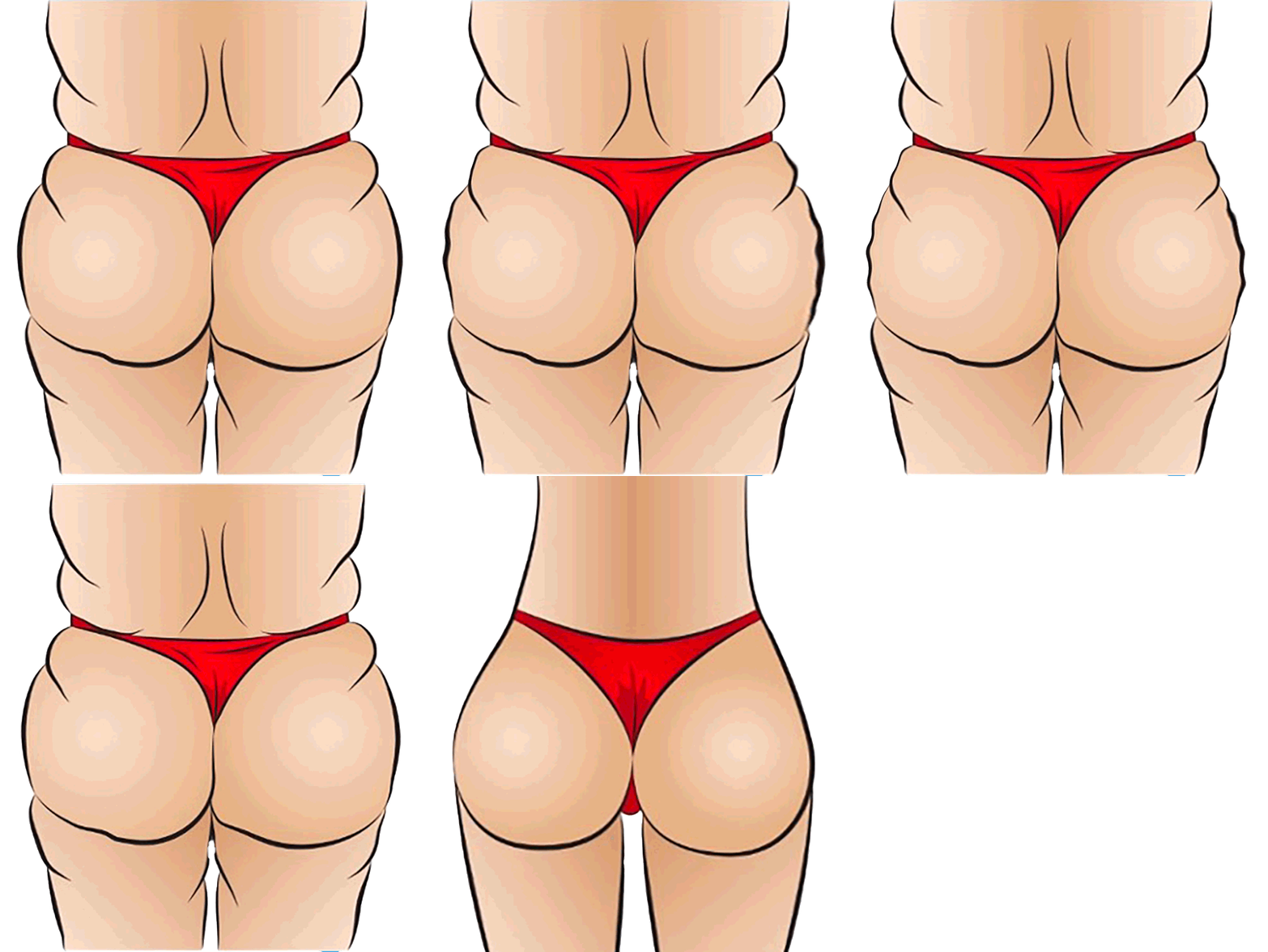
The width can be modified by changing the lateral extension of the gluteal contour. This dimension must always be adapted to the patient’s sex, skeletal architecture and desired silhouette.
In male gluteoplasty, lateral enlargement is generally not appreciated because excessive transverse expansion may feminize the masculine gluteal contour.
Conversely, lateral tightening should generally not be performed in the male buttock. Excessive reduction of the width can eliminate the natural lateral fullness and transform the buttock into a narrow ridge-like contour rather than a recognizable buttock.
Preserve masculine width and lateral continuityTwo Possible Directions
Increasing the lateral extension may be considered when a broader gluteal contour is anatomically desirable, particularly in selected female indications.
Selective indication Generally avoided in menReducing the lateral extension may create a narrower contour in selected situations, but it must be carefully controlled to avoid flattening or excessive narrowing.
Mainly female application Generally avoided in male buttocksIn male gluteoplasty, the objective is usually to preserve the existing width while modifying projection, position or vertical proportions. Width should not be changed merely to create a more dramatic silhouette.
Fundamental Basics · Dimension H
Modifying the vertical height changes the relationship between the gluteal contour and its point of maximal projection. The objective is not necessarily to increase volume, but to control where and how the projection is expressed.
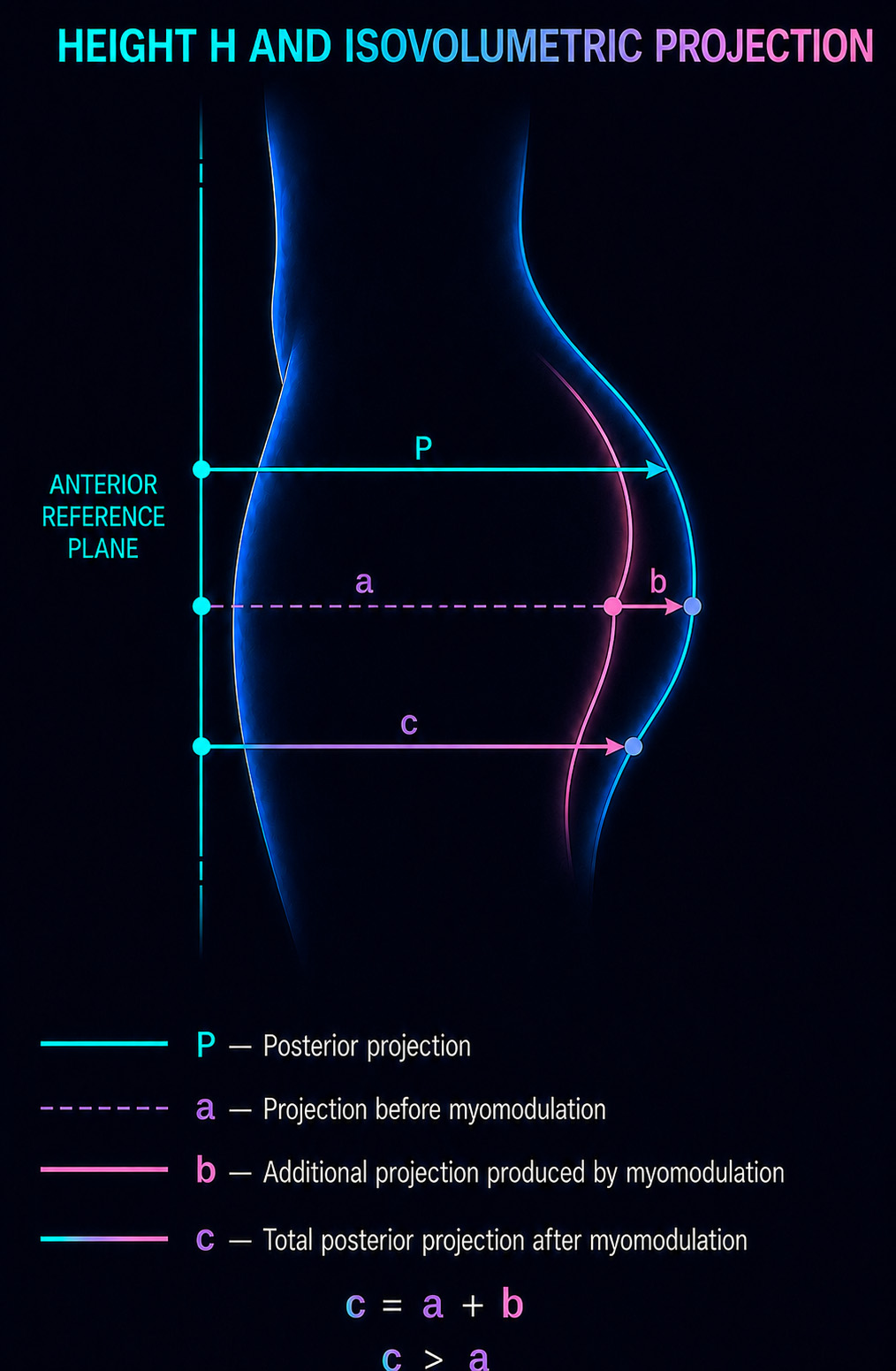
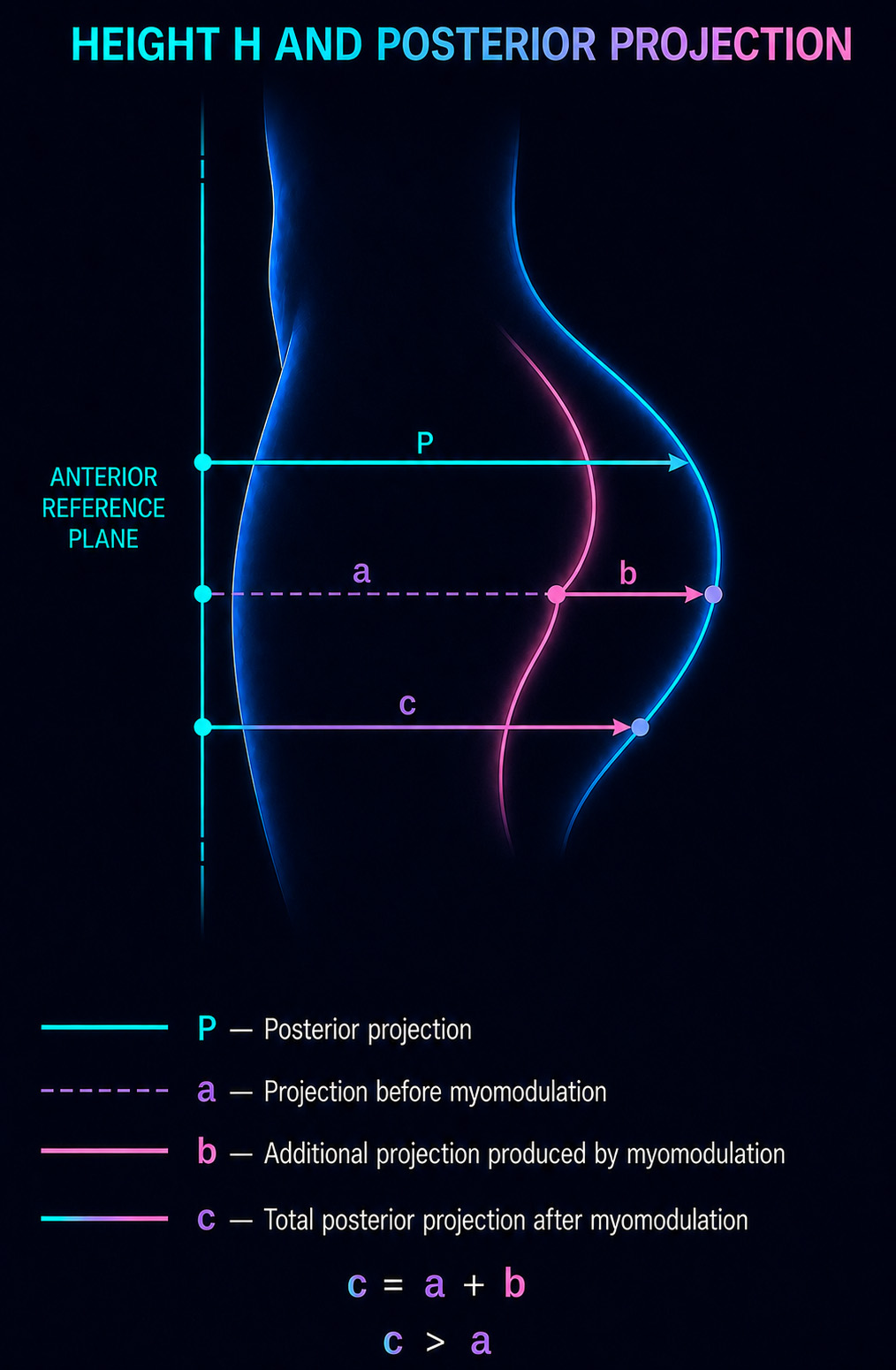
Height H is defined in the standing posterior view. In profile, projection describes the posterior expression of the gluteal contour. These two dimensions must be evaluated together without confusing controlled reshaping with volume augmentation.
In the male buttock, the objective is generally to preserve the existing width and overall projection while controlling the vertical position of the area of maximal projection.
Excessive height or excessive posterior projection may feminize the contour. In athletic men, a controlled shortening of the vertical dimension may reposition the projection without creating an exaggerated volume increase.
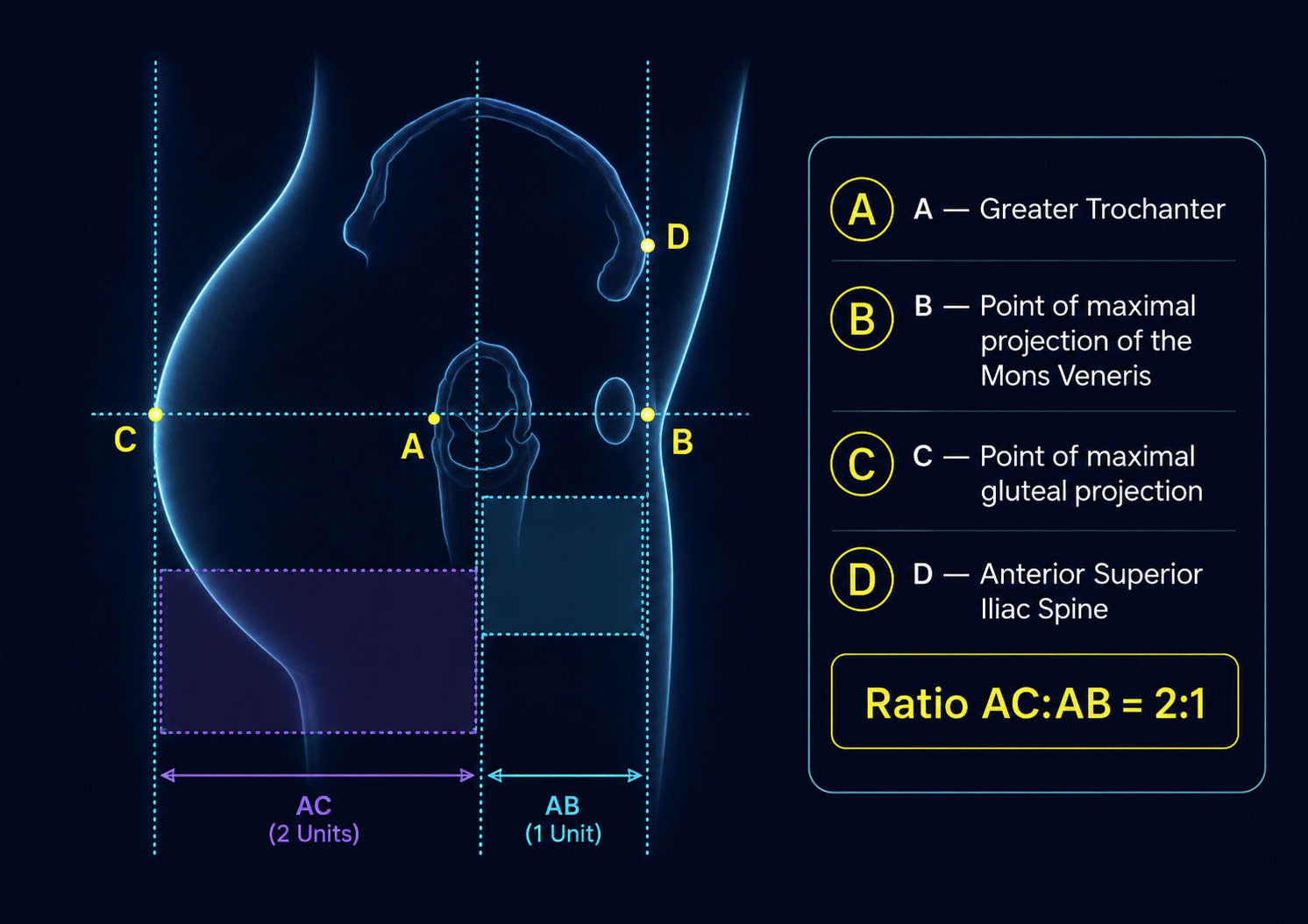
Anthropometric Reference
Anthropometric analysis helps distinguish the projection of the gluteal contour from neighboring pelvic and trochanteric landmarks.
Three-Dimensional Control
Controls the vertical extent of the gluteal contour and contributes to the position of the projection area.
Vertical dimensionDefines the posterior expression of the buttock without necessarily requiring a global increase in volume.
Posterior dimensionMaintains a coherent relationship between height, width and projection according to the patient’s anatomy.
Isovolumetric controlFundamental Basics · Projection Point
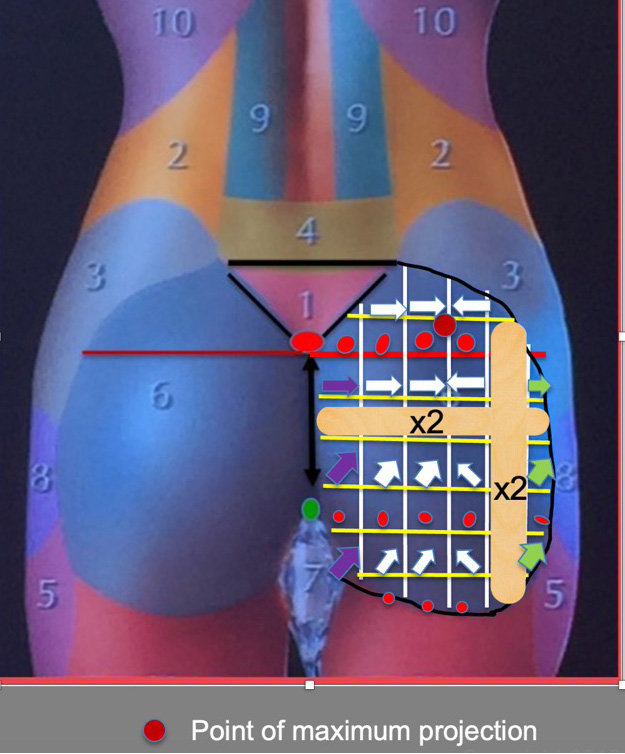
The point of maximal gluteal projection is not predetermined on the nude subject. It is first referenced from the superomedial angle of the jeans back pocket and then transferred to the gluteal contour.
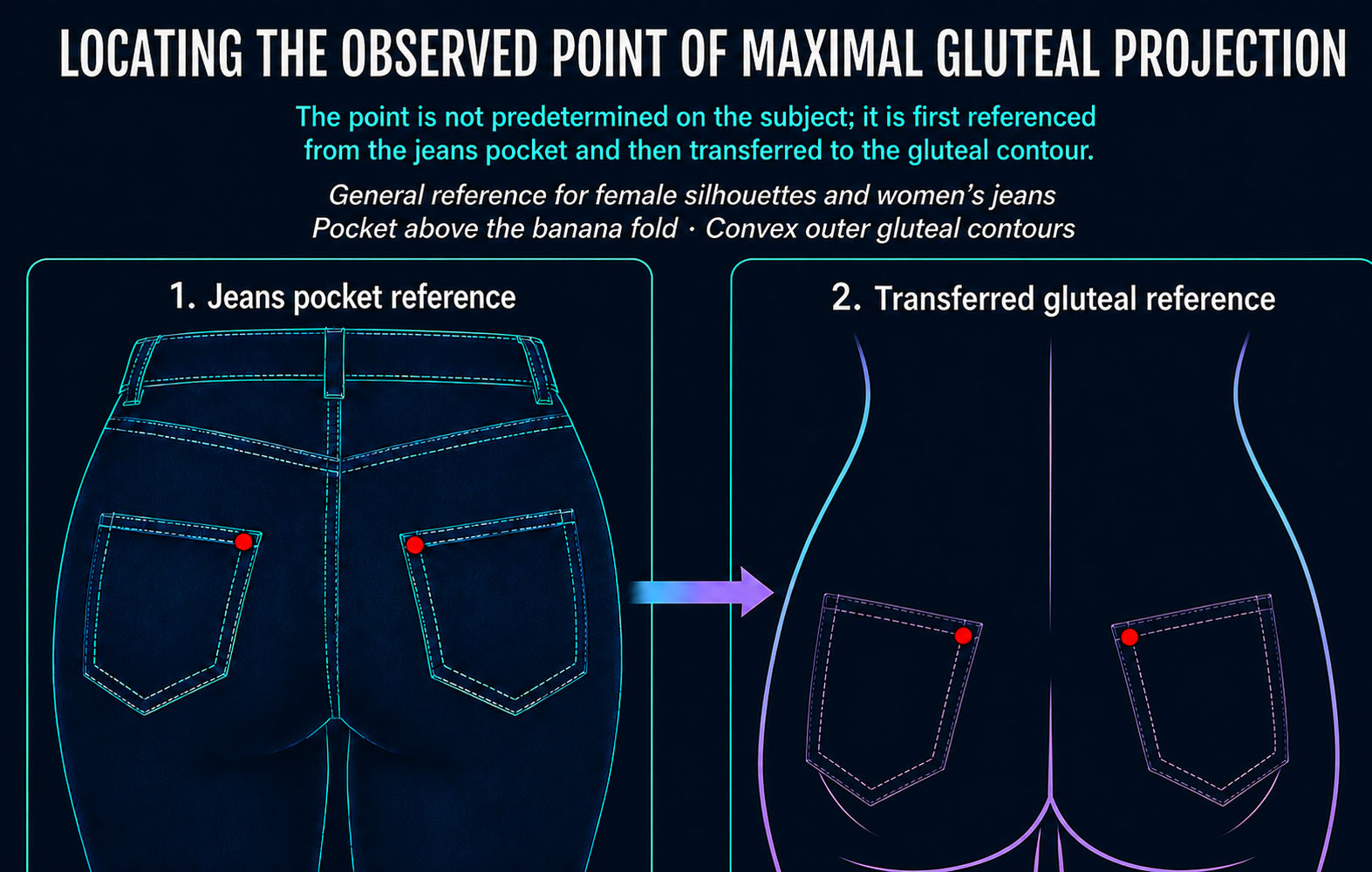
In the general female silhouette and in women’s jeans, the superomedial angle of the back pocket provides the initial external reference for locating the observed projection point.
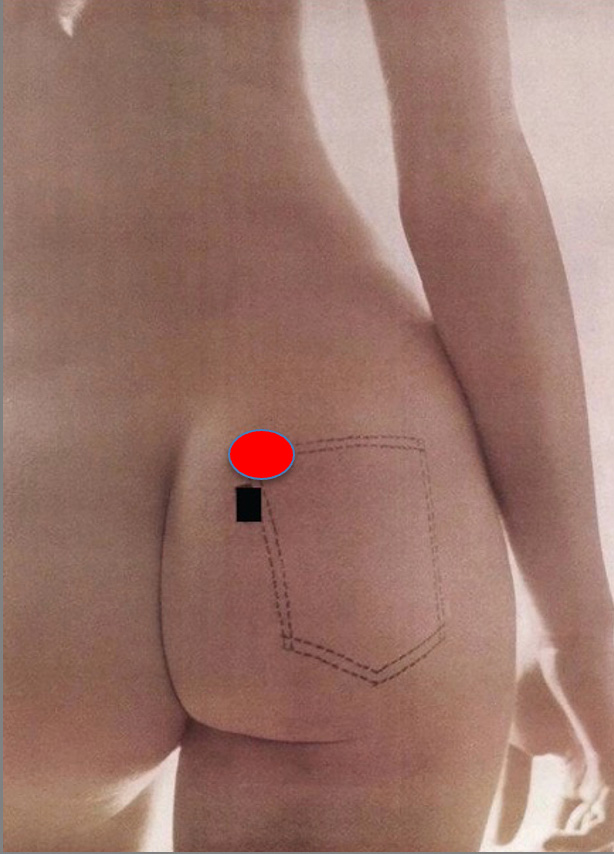
The reference point identified from the jeans pocket is transferred to the corresponding position on the nude gluteal contour. This establishes the initial observed point of maximal projection.
When the maximal projection point is initially located above the red reference line, successive myomodulation sessions may progressively lower it. As the point descends below the line, the gluteal contour becomes more sporty and attractive.
A maximal projection point above the red line generally corresponds to a less sporty and less attractive gluteal contour. This represents an excellent indication for progressive myomodulation.
A maximal projection point below the red line generally corresponds to a more sporty and attractive gluteal contour.
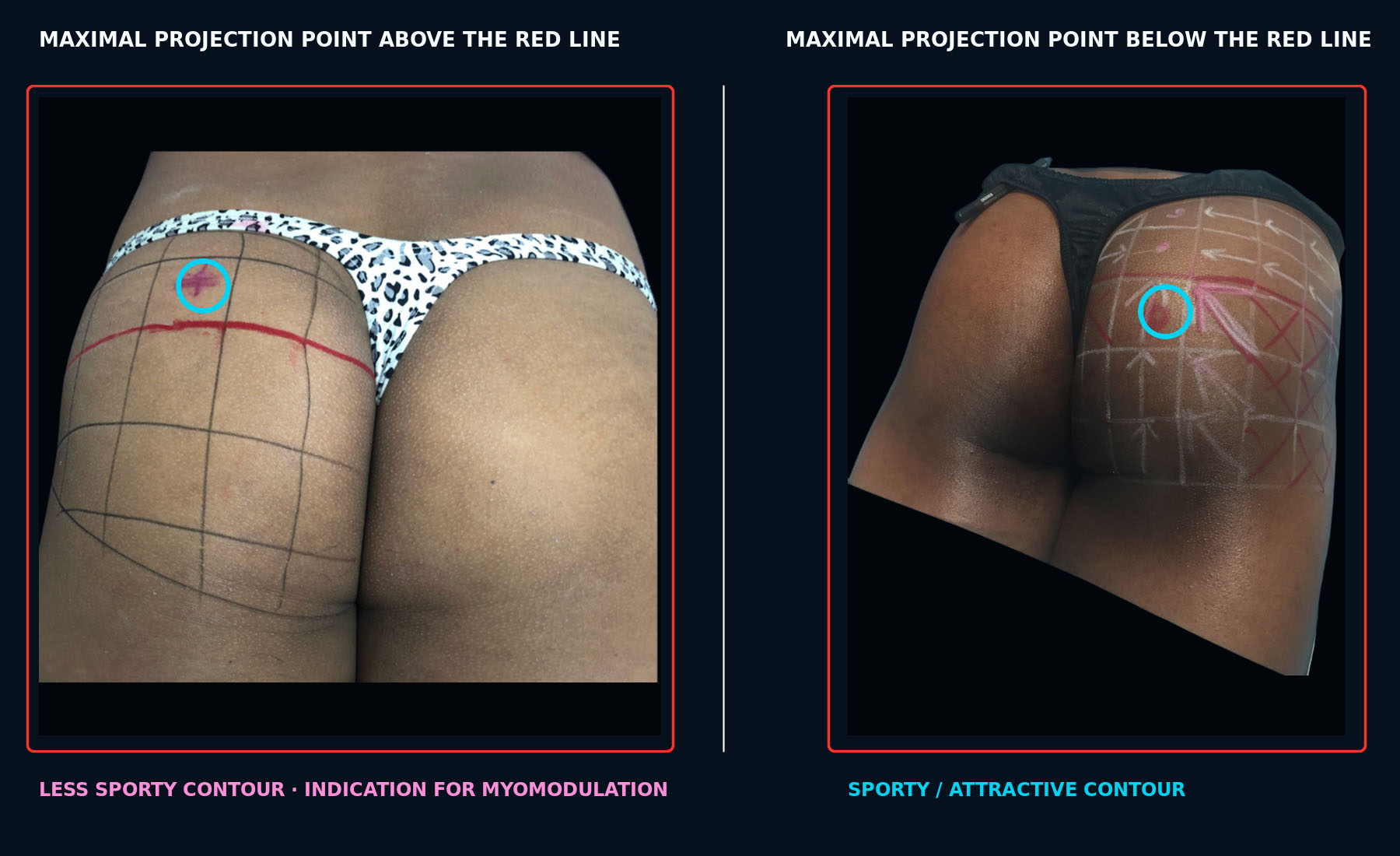
The position of the maximal projection point is used to describe the existing contour and to follow its progressive evolution during myomodulation.
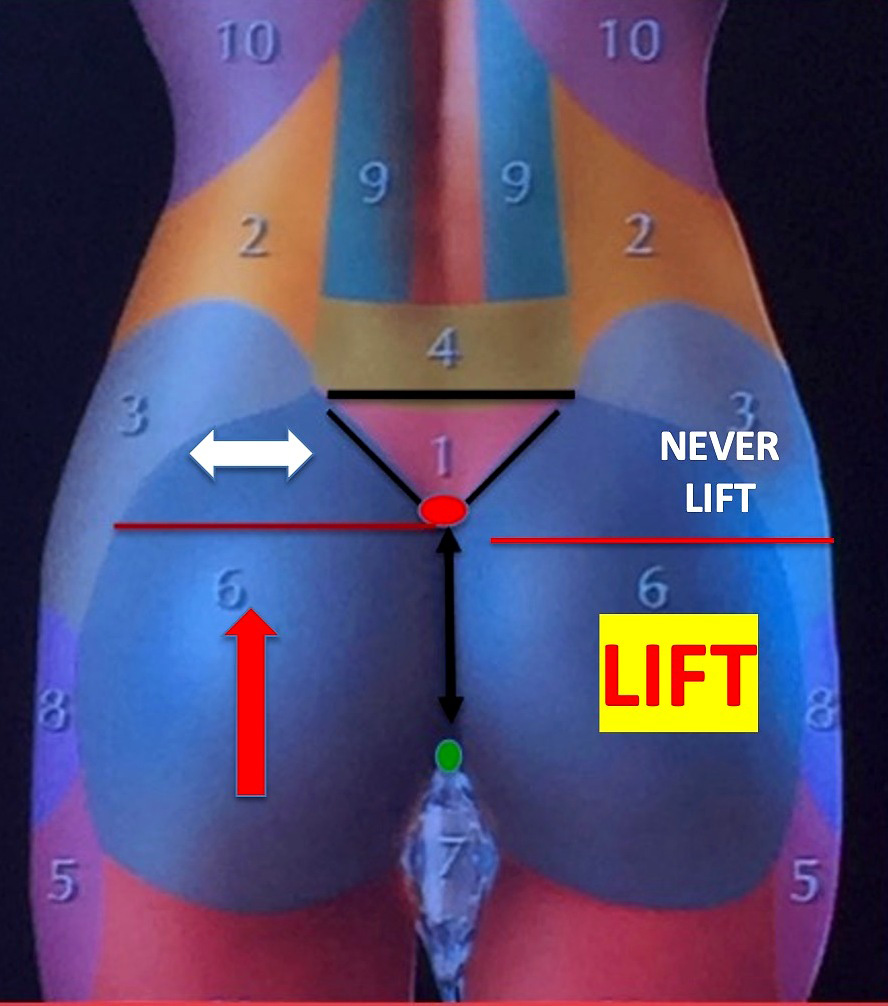
The red line is a procedural boundary. It does not classify the projection point. Regardless of whether the maximal projection point is above or below the line, the gluteal area above the red line should never be lifted.
Fundamental Basics · Three-Dimensional Contour
The position of the maximal projection point describes the existing gluteal contour. The next step is to understand how length, width and projection interact during three-dimensional isovolumetric reshaping.
The desired contour is obtained by modifying the relationship between vertical length, transverse width and posterior projection. The exact combination depends on the patient’s anatomy, sex, body proportions, cultural preference and aesthetic objective.
Female contour objectives vary according to anatomy, ethnicity, culture and personal preference.
Feminization aims to modify the masculine contour without relying on indiscriminate volume augmentation.
In the non-athletic male contour, the maximal projection point is generally positioned higher on the gluteal contour—above the red reference line.
In athletic men, the maximal projection point is generally located below the red reference line.
Length, width and projection must always be analysed together. Their relative modification varies according to the female contour, male buttock feminization, the non-athletic male contour or the athletic male contour.
Fundamental Basics · Male Gluteal Application
In the male buttock, three-dimensional myomodulation does not follow a single template. The desired contour is obtained by coordinating length, width, projection and the position of the maximal projection point.
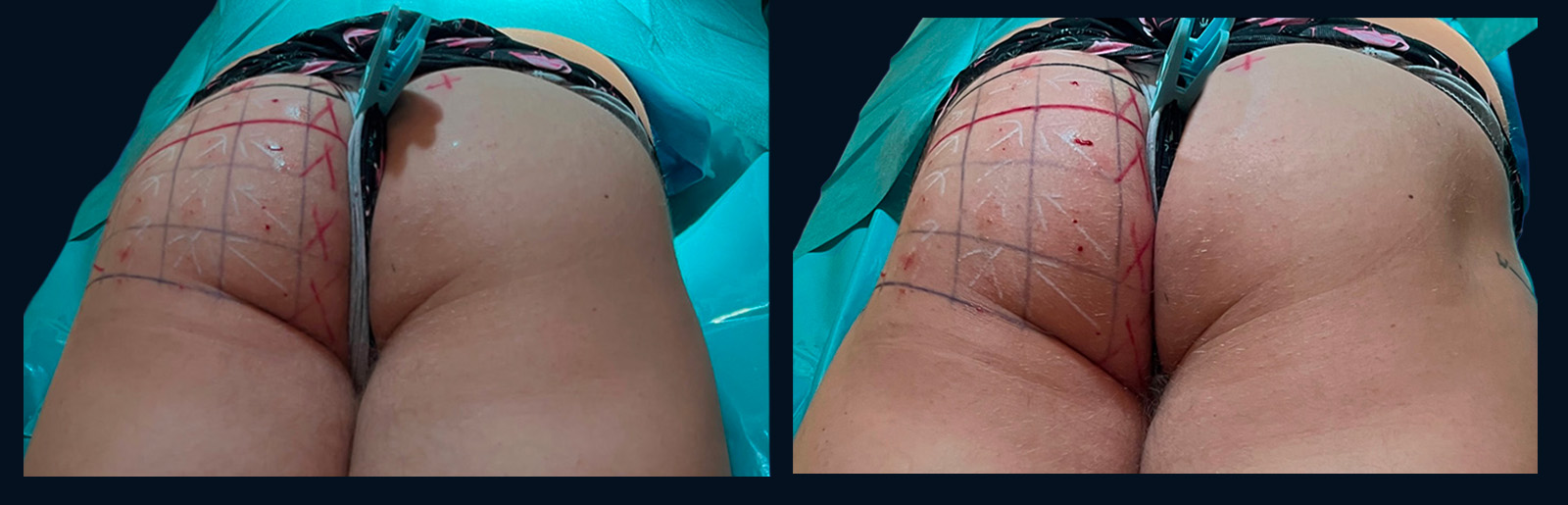
Isovolumetric reshaping preserves the three-dimensional relationship of the buttock while modifying its configuration. The clinical objective determines how length, width, projection and the position of maximal projection are coordinated.
In the non-athletic male contour, the maximal projection point is generally positioned higher on the gluteal contour—above the red reference line.
In athletic men, the maximal projection point is generally positioned lower on the gluteal contour—below the red reference line. The objective is to lift and redistribute an already developed muscular contour.
Feminization modifies the masculine distribution of the buttock through controlled lateral convexity, posterior projection and lifting of the infragluteal area. The intergluteal cleft may also be widened according to the desired contour.
The treatment reshapes the existing three-dimensional contour by coordinating length, width, projection and the position of maximal projection according to the patient’s anatomy and contour objective.
Fundamental Basics · Morphological Analysis
Before defining the desired contour, the existing anatomy must be analysed. Pelvic proportions, tissue distribution, muscular development and the position of maximal projection influence the final strategy.
Morphological analysis identifies the existing relationship between length, width, projection, tissue distribution and muscular structure. The treatment plan must then be adapted to this starting configuration.
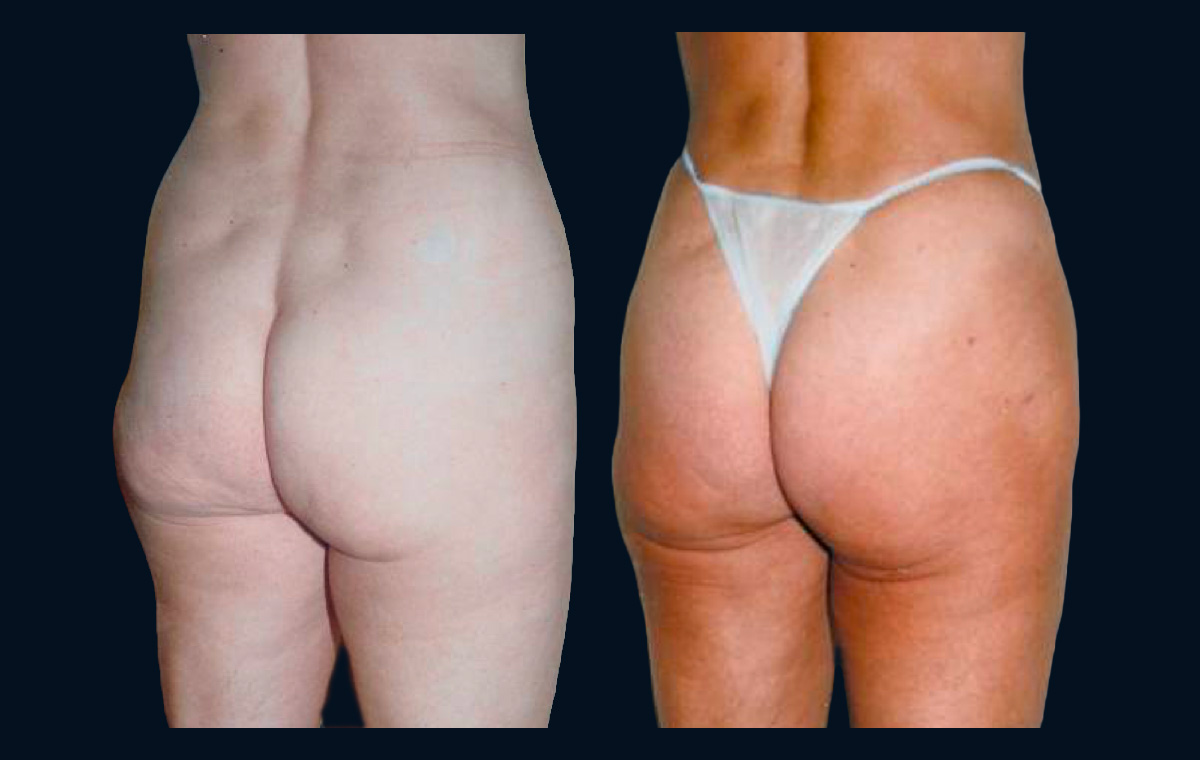
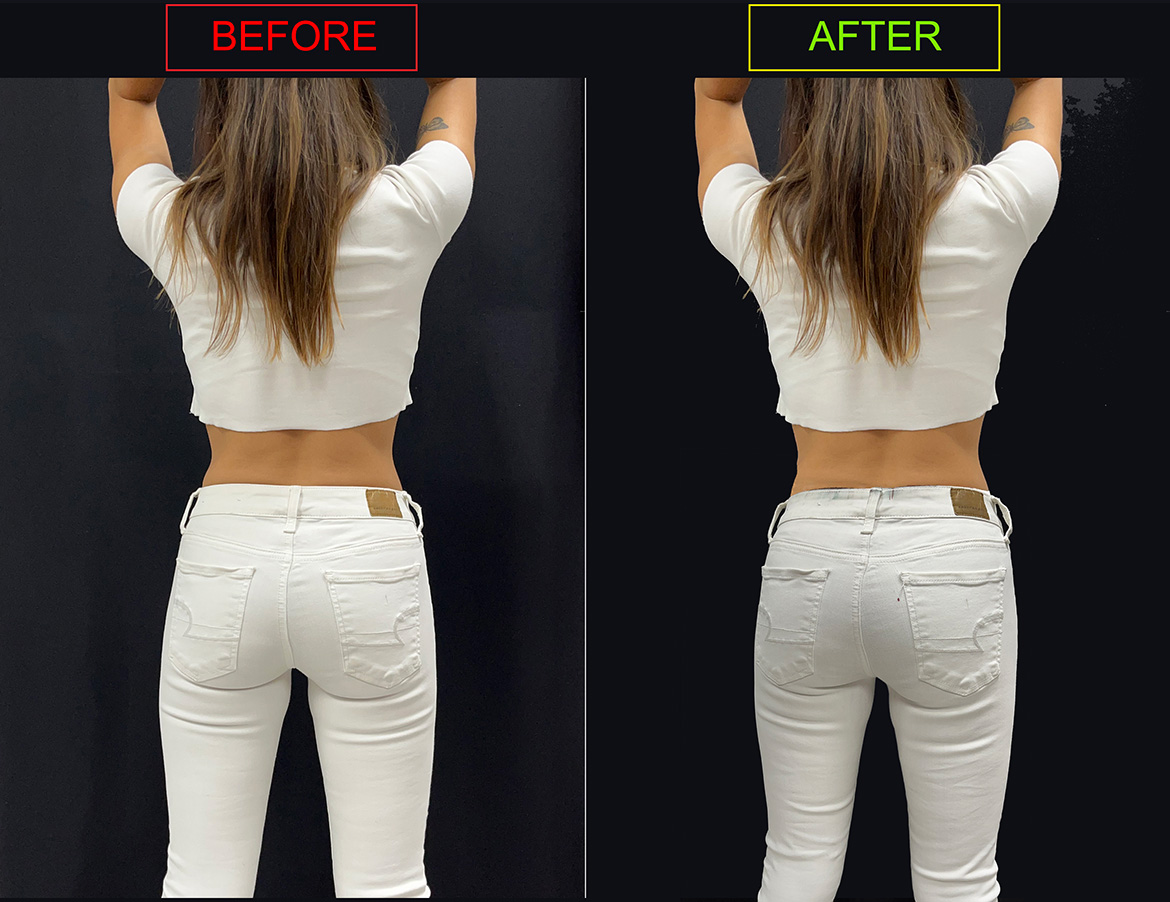
This before-and-after image illustrates a contour following lipoplasty. The reduction of excess tissue may reveal residual laxity, insufficient projection or an incomplete three-dimensional contour, indicating the need for subsequent gluteal myomodulation.
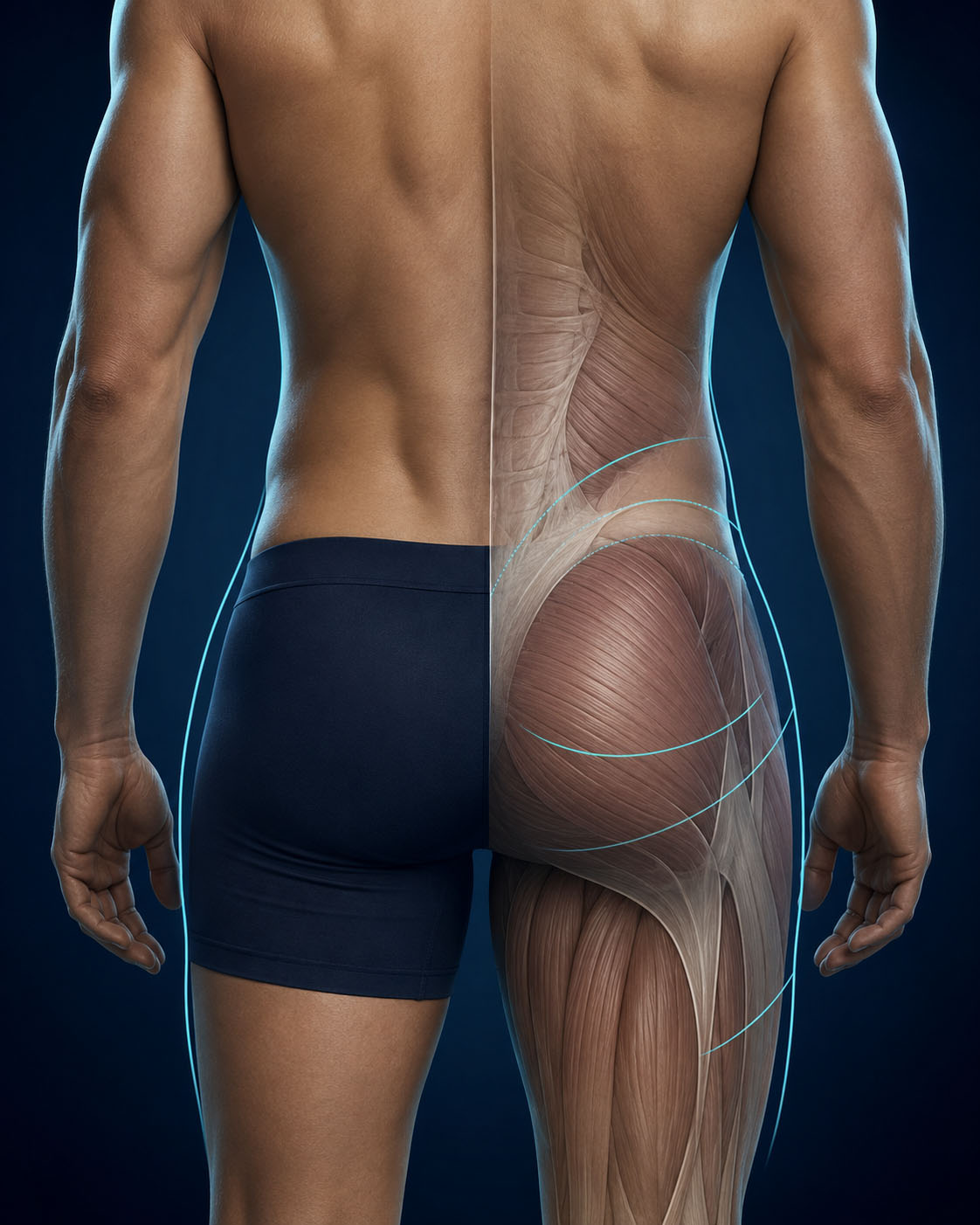
Male gluteal morphology is influenced by pelvic geometry, muscular development, the lateral contour and the vertical position of the maximal projection point.
The desired contour cannot be planned independently of the existing anatomy. Morphological analysis is the first step in selecting the appropriate three-dimensional direction of reshaping.
Fundamental Basics · Individual Planning
Treatment planning begins with the existing morphology and ends with a clearly defined three-dimensional contour objective.
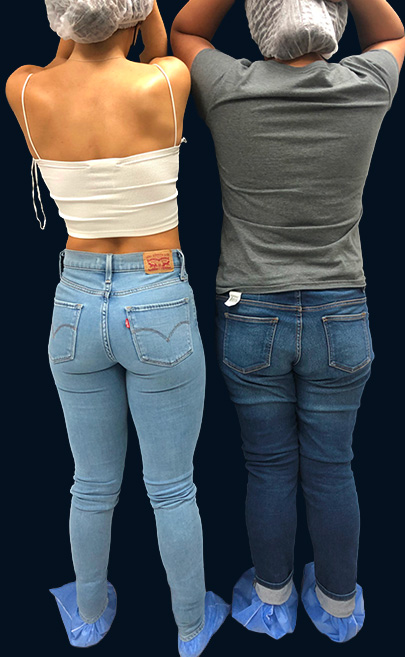
The same gluteal morphology may appear differently according to body proportions, garment design, pocket position and the patient’s aesthetic preference. Treatment planning must therefore consider both the anatomy and the way the contour is perceived in clothing.
Assess pelvic proportions, tissue distribution, muscular development, lateral contour and the current position of maximal projection.
Determine whether the desired result is structural refinement, controlled lifting, redistribution, lateral convexity or a more feminine three-dimensional configuration.
Decide how length, width, projection and the area of maximal projection should be reduced, preserved, increased or redistributed.
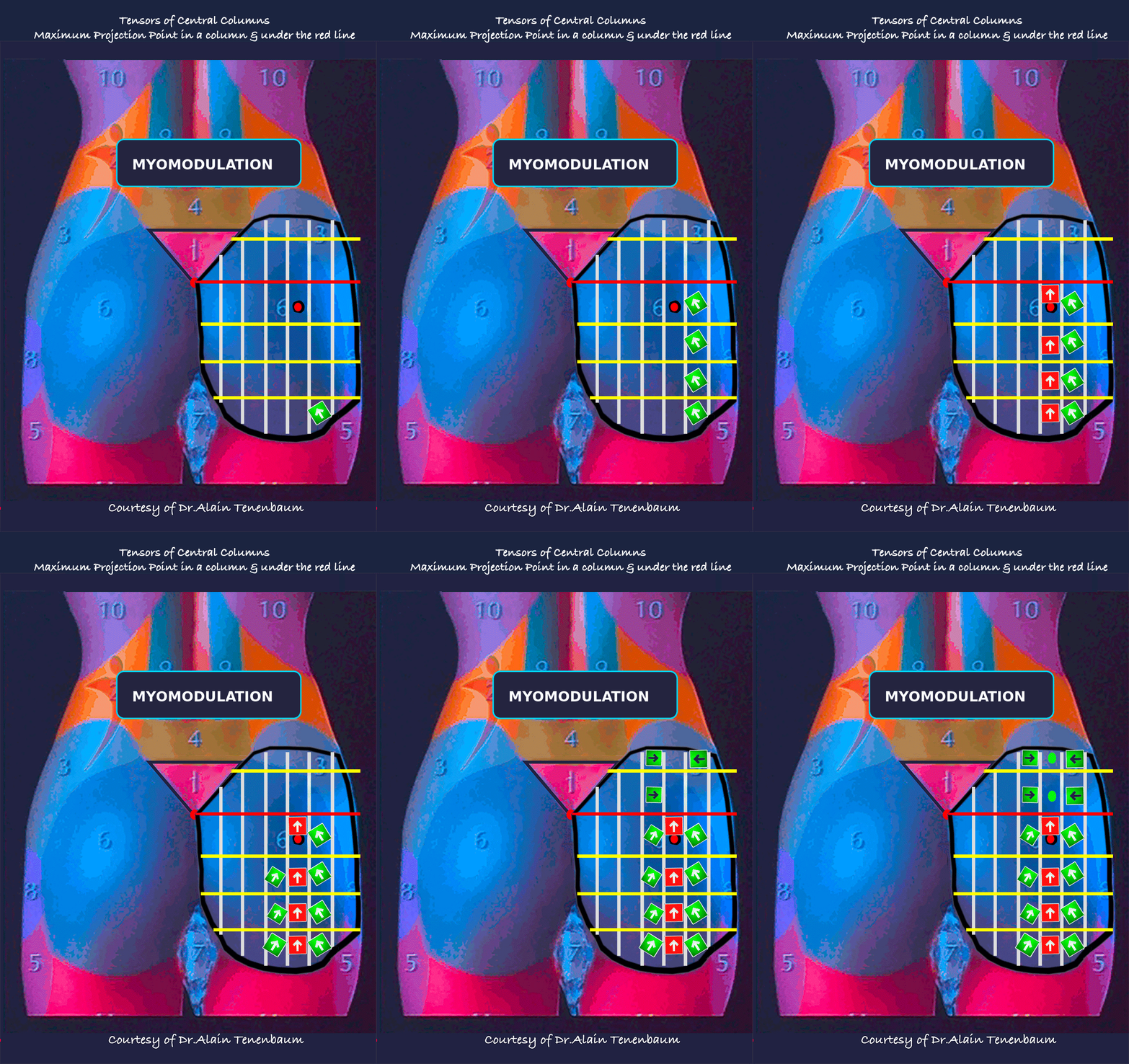
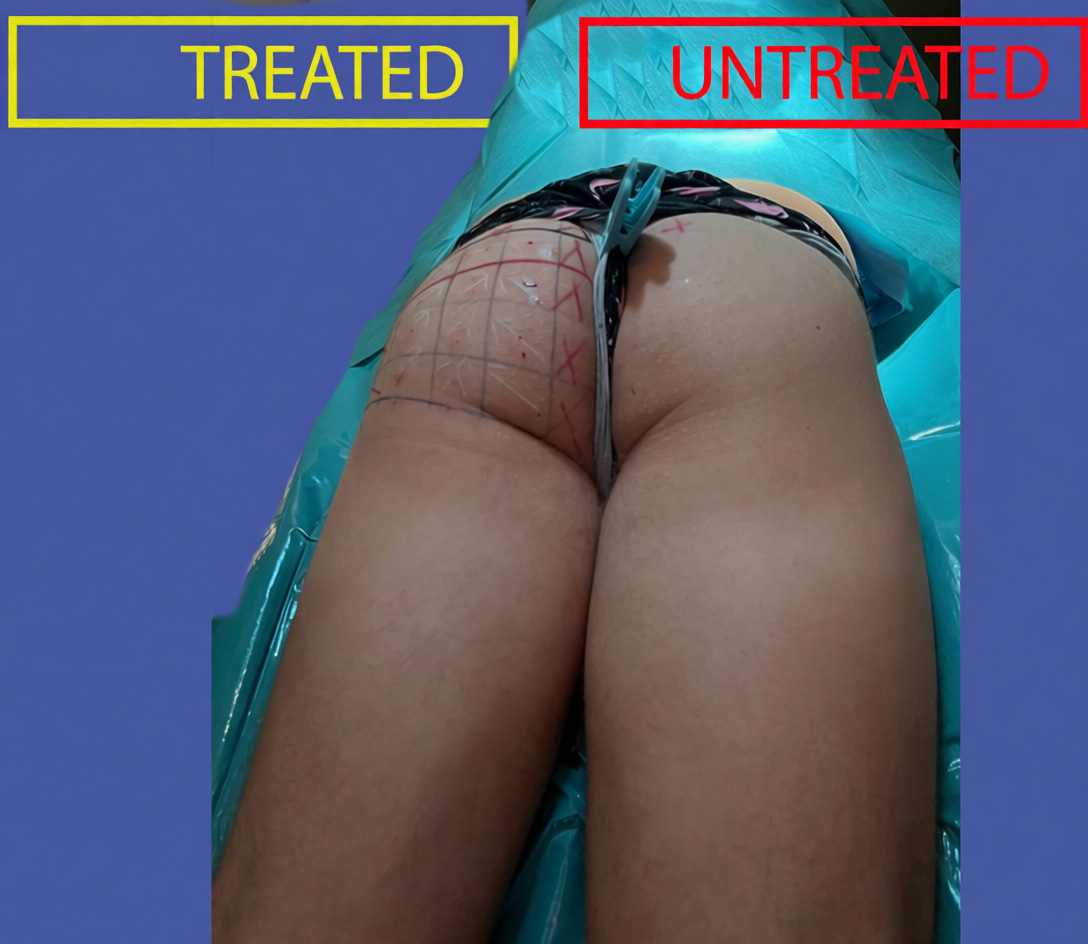
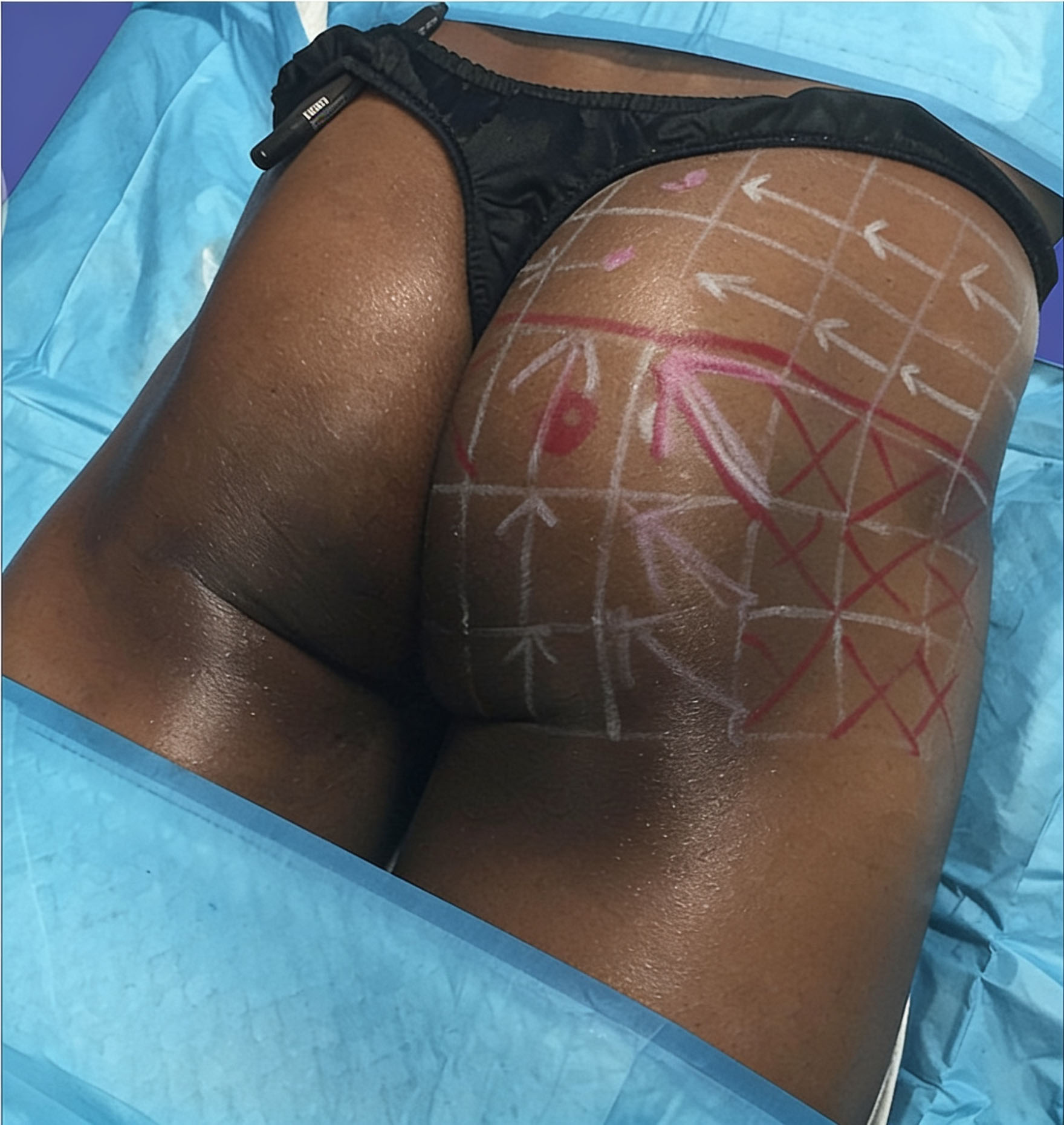
Convert the desired contour into a personalized distribution of treatment points, vectors, tensors and anatomical zones.
Treatment points are not selected independently. Their position, direction and sequence must follow the desired three-dimensional redistribution of the gluteal contour.